An AI pipeline that drafts game sprites and sound effects
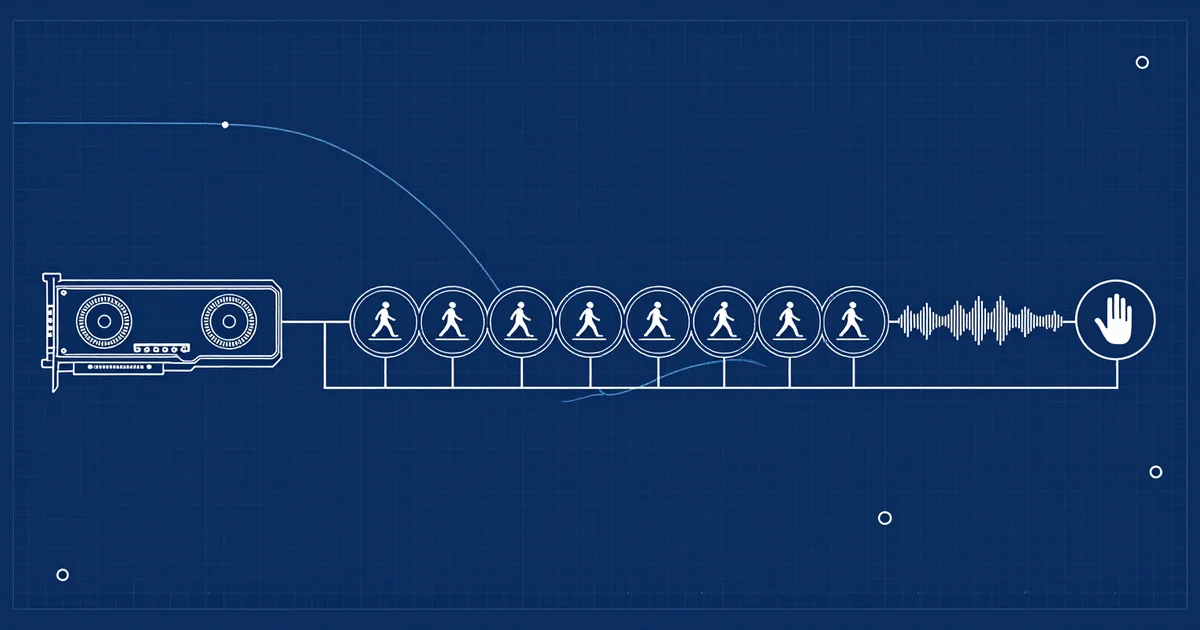
Our own tool: animated sprite drafts and short sound effects generated on in-house GPUs, with artists choosing and finishing what goes into a game.
- Industry
- Game development (our own studio tool)
- Scope
- Workflow design, AI model integration, web app, job queue, image post-processing
- Duration
- Live since July 2026, developed further since
- Built with
- ComfyUI workflows on in-house NVIDIA RTX 4090 workstations, web app and API, job queue, Stable Audio for sound drafts
Context
We built this tool for our own game work. A small game still needs many animation frames and many short sounds, and most of that is slow, repetitive work. We wanted the first draft to come faster while the artists kept the final say. More about our AI and automation work.
Problem
Frames of an animated sprite have to match each other and the game's art style. Sprites need clean transparent backgrounds, and effects such as fire and smoke need soft edges that an ordinary cut-out destroys. Each game has its own style, so one fixed setup would not do. Only our team could have access, and everything had to run on hardware we control.
Solution
The tool is a web app around image-generation workflows in ComfyUI, running on our own GPU workstations.
- The team starts from a character image and a motion. The pipeline returns draft frames as a sprite sheet on a transparent background.
- For backgrounds, we tested six background-removal models on real sprites and kept the one that handled our art best.
- Effects such as fire and smoke go through a separate mode that keeps their soft transparency instead of cutting hard edges.
- An administrator adds a new art style by uploading a workflow. The app checks it and runs a test before anyone can pick it.
- Jobs from the whole team share one queue that everyone can see.
- Short sound effects and loops without vocals are drafted with a Stable Audio workflow on the same machines.
The output is a draft. Artists choose which drafts to use, then retouch and finish them.
Result
The first version went live on 28 July 2026, the day the project started, at an internal address that only approved team accounts can sign in to. Adding an art style means uploading a workflow; the app's code stays the same.
Tell us what you want to build.
Send a few lines. We reply within 1 business day, and the first scoping call is free.